AINIA / Soluciones y servicios / Consumer and markets / Sensory studies with a trained panel
- Consumer and markets
Food Sensory Analysis
Sensory evaluation of food with a trained panel
At different stages of the product life cycle, and especially during product development and optimisation phases, it is necessary to establish an objective description and quantification of the sensory characteristics of the product, prototypes and competing products, in order to identify similarities and differences at sensory level and implement the necessary actions. Reformulation, product optimisation or the introduction of a new ingredient require an understanding of the sensory impact on the product in order to validate new formulations and processes.
Establishing sensory shelf life to monitor quality loss based on the sensory evaluation of critical attributes involved in product deterioration is another area of application of this service line. In short, the sensory profiles and sensory maps obtained provide key information to understand changes in the product, the product category and its strategic positioning in the market.

At AINIA, we add value
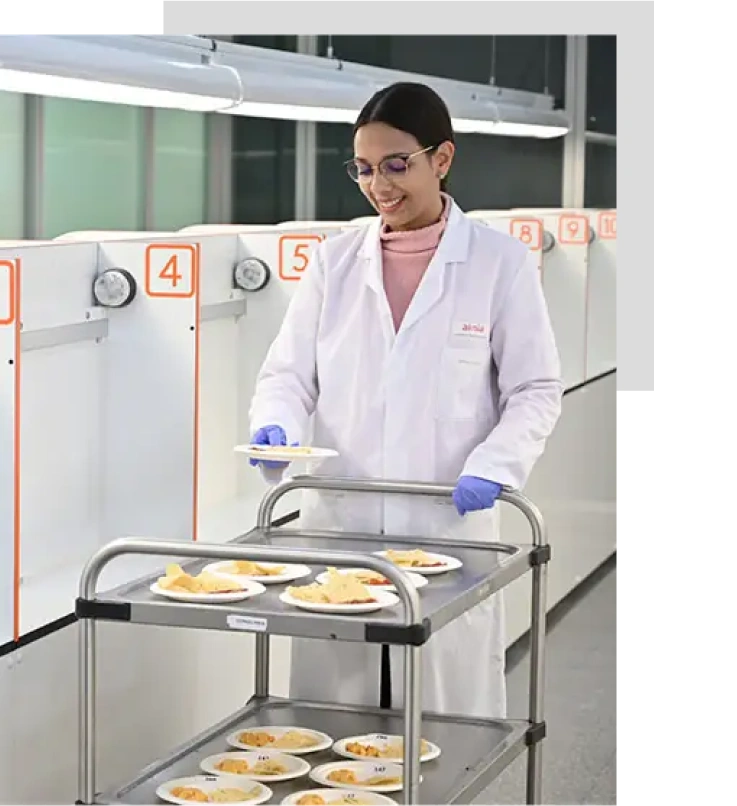
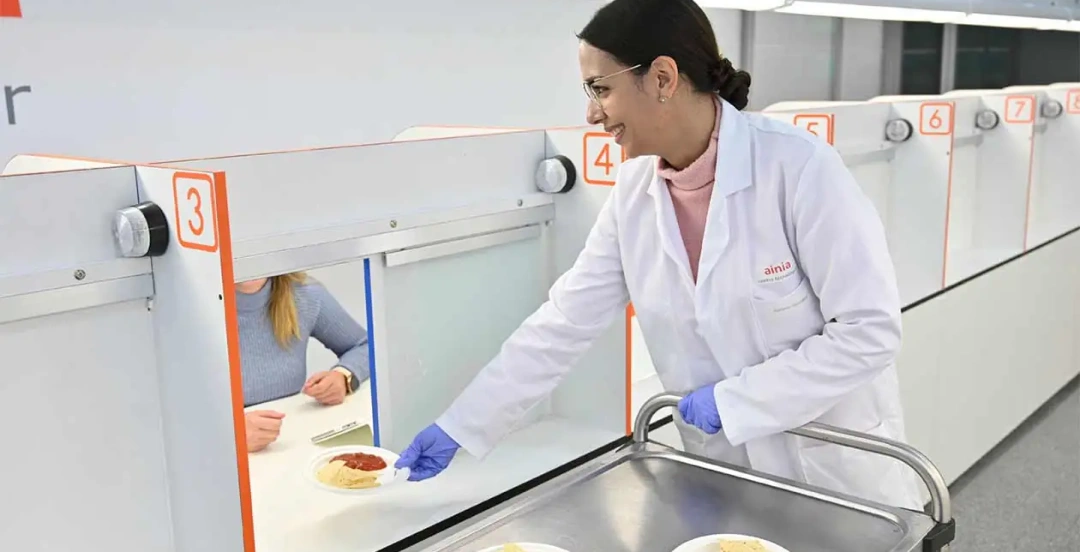
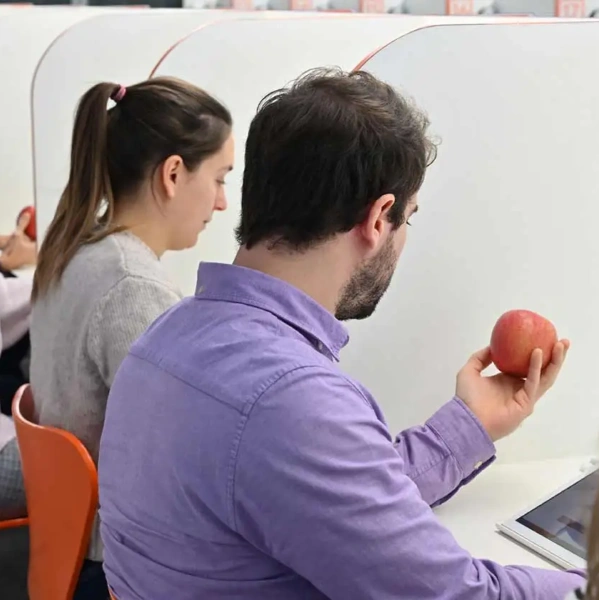
- We have a multi-product trained panel made up of 10-12 tasters with more than 2,000 hours of experience in the sensory description of a wide variety of product categories such as soft drinks, canned fish, ready meals, olives, gazpachos, baguettes, pizza doughs, meat, dry-cured sausages, dairy products, sugar, sauces, etc.
- Speed, rigour and flexibility in carrying out descriptive sensory studies thanks to the availability of our multi-product trained panel, which only requires additional specific training for the category to be evaluated.
- We have a multidisciplinary team of experts in sensory analysis and food technologists to ensure the proper interpretation of sensory profiles and maps, providing companies with key and actionable information for decision-making in the product development and improvement process.
- Depending on the objectives and context, we apply different methodologies, both classic methods, such as Quantitative Descriptive Analysis (QDA), and more recent rapid methodologies (Napping, Flash profile, etc.).
- Our more than 30 years of experience, experimental design and statistical analysis, together with the control and standardisation of all variables — sample preparation, reference design, training in the use of the scale, etc. — enable us to obtain rigorous and actionable results.
Food sensory testing: Sensory profiles
- Sensory profiles and sensory maps are valuable outputs that make it possible to understand the product category and monitor the sensory positioning of the product in the market.
- Depending on the specific objective and context, we apply different descriptive methodologies that require varying levels of panel training and qualification.
- In combination with consumer preference data, we define product optimisation pathways (Preference Mapping).
Food sensory panel: Preference Mapping
Preference Mapping is a tool that makes it possible to link consumer preferences with the objective sensory characterisation of product attributes for the same set of products, prototypes and competing products. It enables companies to identify which products consumers like and understand why, offering clear guidelines to optimise the product and maximise its acceptance.
Consumer segmentation based on tastes defines the preference drivers of each consumer group and makes it possible to identify market niches.
Would you like to know more?
Leave us your details and we will contact you to answer your questions or continue the conversation.