- Agri-food sector
Solutions for the agri-food sector
Sector challenges
- Innovative products and ingredients for the food of the future
- Quality and food safety
- Process automation
- Efficiency in production processes (by-product valorisation, upcycling)
- More sustainable business models
- Market and consumer insight
Our value proposition
- We integrate science, technology and market insight: applied R&D&I, advanced analytics and consumer research.
- We accelerate your product development with differentiating capabilities (in vitro dynamic digester, cell laboratory and 3D cell-line printer).
- We ensure regulatory compliance and effective risk management (expert team in food law and RREE detection tools).
- We digitalise quality and production through AI, advanced vision and sector-specific big data.
- Reference laboratories and accredited testing services, with national and international reach.
- We help ensure compliance with quality and safety standards for food, facilities and protocols.
Solutions and services
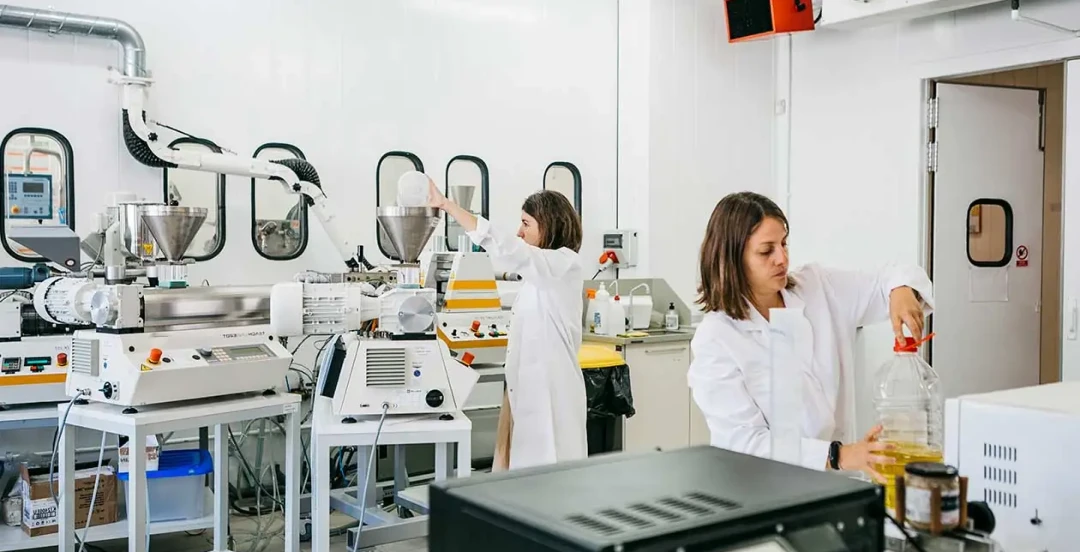
We offer solutions that integrate sustainability, digitalisation, new raw materials and products, and regulatory compliance, supported by more than 300 professionals and 21 pilot plants dedicated to innovative technologies that enable processes to be scaled up to pre-industrial levels.
R&D&I and technology
Product development and improvement
New processing/cooking methods
Functional packaging
Design of active packaging, strength, packaging-product interaction
Bioeconomy and circularity
By-product valorisation, biorefineries, efficient water use
Food law
Composition, labelling, claims and European procedures
Food safety management
HACCP/BRC/IFS, risk prediction, fraud and emerging risks
Digital platforms
Food Safety Analytics
Food safety data analysis
Digital Food Factory
Traceability and predictive models in production

NIRSpector / CHEMInspector / TERMOSEAL
Online quality control
Crop Inspection Platform
Advanced remote sensing solution designed for agri-food operations
Laboratory
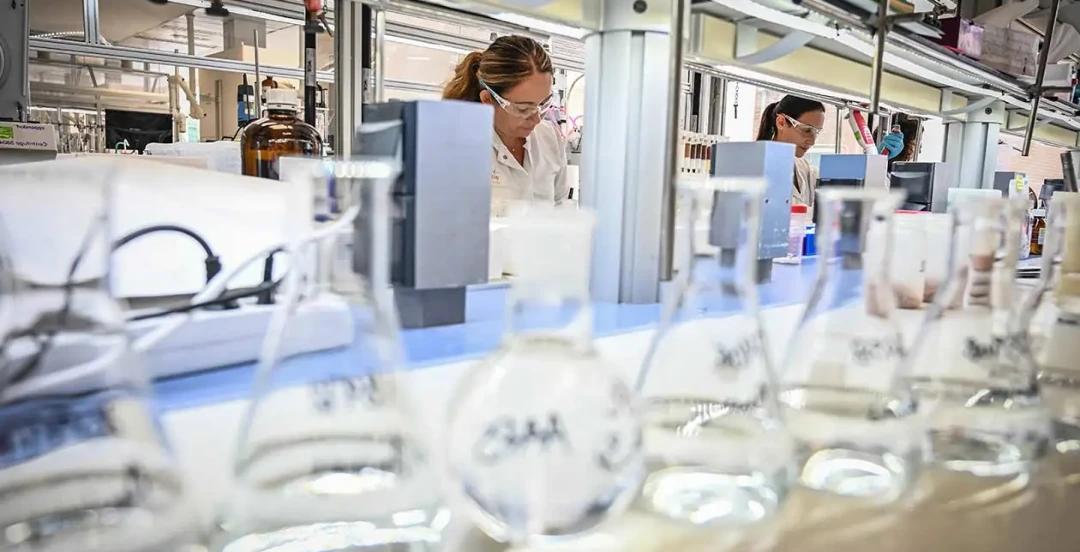
Physico-chemical (contaminants, residues, nutritional composition), microbiology and food contact materials
Food safety data analysis
Technical support services (shelf life, challenge test, 24-hour crisis management)
Traceability and predictive models in production
Events
In 2026, we are taking another step forward in the way we build community. For the first time, from AINIA...
Success stories
- 2022
HEINEKEN SPAIN
We have collaborated with the company HEINEKEN ESPAÑA, which is developing various initiatives to reduce its environmental impact. In this context, in order to minimise the contamination of its wastewater and, at the same time, recover valuable compounds contained within it, AINIA carried out a study for the implementation of electrodialysis processes with bipolar membranes at the company’s production plant in the province of Valencia. As a result, a complete treatment system has been designed that will reduce the conductivity of the generated wastewater and enable the recovery of sodium hydroxide at concentrations and quality suitable for reuse within the industry itself.
- 2024
ARTEMISA
The companies ENSIS and MAHOU are collaborating in this consortium project focused on the research and development of fermented beverages capable of modulating the intestinal microbiota and improving the quality of life of people with metabolic osteoarthritis. These companies have subcontracted AINIA to carry out in vitro preclinical studies on gastrointestinal digestion, colonic fermentation, and the biological effects of the ingredients and products developed within the project. The project is funded by CDTI.
- 2022
SAVECREAM
The SAVECREAM project is aimed at reducing the volume of waste generated in ice cream production by optimising the use of creams produced during start-ups, reusing and reconditioning them for subsequent use in the production process. AINIA’s collaboration focuses on monitoring the degradation or loss of functionality of the ingredients used, as well as evaluating the impact of using reprocessed creams on the characteristics and shelf life of different ice cream categories. This improvement not only contributes to reducing waste and its environmental impact, but also to lowering the consumption of ingredients with a high carbon footprint, such as dairy products or tropical fats, among others. This new circular economy model will also lead to reduced water consumption during the ice cream manufacturing process.
Capabilities and infrastructure
- +16,500 m² of state-of-the-art facilities
- +140 ENAC-accredited tests
- Innovation room
- Training rooms and auditorium
Would you like to know more?
Leave us your details and we will contact you to answer your questions or continue the conversation.