¿Aún no eres una empresa asociada? Asóciate aquí
- Análisis de ciclo de vida. Huella ambiental
- Conservantes y antimicrobianos naturales
- Consultoría en APPCC, BRC, IFS
- Desarrollo de técnicas rápidas de detección (offline)
- Detección rápida de contaminación microbiológica
- Diseño higiénico equipos e instalaciones
- Estudios de diagnóstico y alteración
- Estudios de eficacia viricida, bactericida y fungicida
- Limpieza y desinfección de superficies
- Mejora sanidad vegetal y animal
- Modelos microbiológicos
- Nuevas tecnologías de conservación
- Obtención de extractos naturales funcionales
- Sensores para detección de cuerpos extraños, composición producto
- Servicios de Seguimiento Normativo. LEXAINIA
- Sistemas digitales para la gestión de la seguridad alimentaria
- Alimentos e ingredientes funcionales
- Asesoramiento legal alimentario
- Desarrollo de reformulación de producto
- Diseño de nuevos métodos de elaboración de alimentos
- Extracción de compuestos naturales y principios activos – FSC
- Fermentación de alimentos, biomasa o de precisión
- Obtención de ingredientes protéicos
- Plant based foods
- Probióticos
- Procedimientos Europeos de autorización
- Productos basados en otras proteínas alternativas
- Aprovechamiento de subproductos
- Biofertilizantes y biopesticidas
- Biogás y biometano
- Biorrefinerías
- Depuración de aguas residuales
- Eco-diseño de envases y estudios de reciclabilidad
- Estudio viabilidad plantas de biogás
- Obtención de compuestos de alto valor añadido
- Pérdidas y desperdicio alimentario (food waste)
- Uso eficiente y circular del agua
AINIA / Microbiological characterisation by culture
- Laboratory
Microbiological characterisation by culture

Culture-based isolation techniques
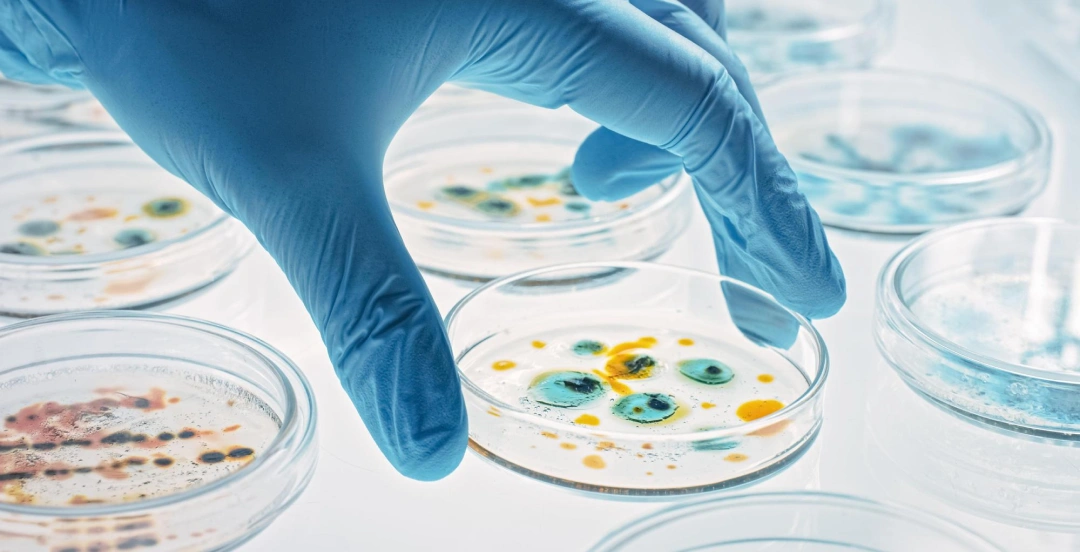
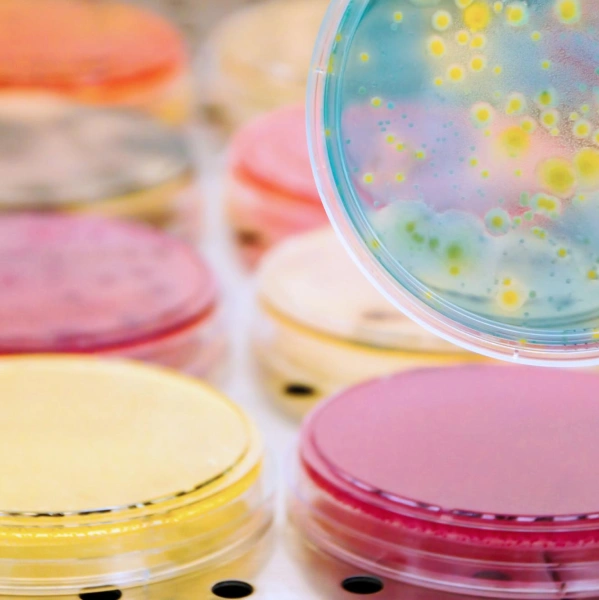
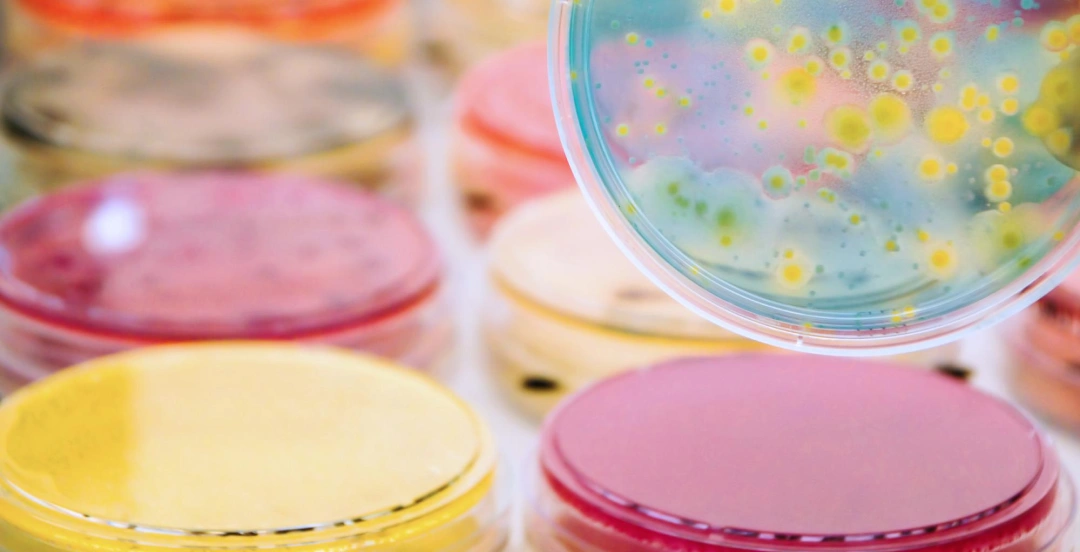
Culture-based isolation techniques rely on the use of culture media and incubation conditions (time and temperature) that allow the characterisation, identification and quantification of the microbial diversity present in food, ensuring quality, stability and safety throughout its shelf life, as well as evaluating the effectiveness of surface hygiene processes.
These techniques underpin ISO reference standards and pharmacopoeia methods, focused on the analysis of pathogens, quality indicators, spoilage microorganisms and beneficial microorganisms such as probiotics. AINIA performs the analysis of all these microorganisms to support companies in decision-making when establishing the microbiological suitability of their products and facilities.
Applications
With these techniques, it is possible both to detect, by applying enrichment and isolation methods, and to quantify, through plate count methods (surface or pour plating) or MPN (most probable number, liquid dilution method), microorganisms in products intended for human consumption, animal feed, fertilisers, plant material, pharmaceutical and cosmetic products, among others, as well as to assess hygienic quality conditions of facilities through environmental and surface sampling using supports such as swabs, contact plates, wipes, etc. Specifically, we can analyse microorganisms:
- Pathogens
- Food-related
Salmonella spp., Listeria monocytogenes, pathogenic Yersinia enterocolitica, Cronobacter spp., Shiga toxin-producing Escherichia coli (STEC), Bacillus cereus; Clostridium botulinum, Clostridium perfringens, Vibrio cholerae, Vibrio parahaemolyticus, Campylobacter spp., etc.
- Pharma and cosmetics
Pseudomonas aeruginosa, Burkholderia cepacia, Candida albicans, Staphylococcus aureus, etc.
- Beneficial
Probiotics, starter cultures: lactic acid bacteria, bifidobacteria, yeasts, etc.
- Quality indicators
- Spoilage
They deteriorate the organoleptic and physicochemical quality of the product: moulds, yeasts, lactic acid bacteria, Pseudomonas spp., Alicyclobacillus spp., acetic bacteria, osmophilic yeasts, etc.
AINIA’s competitive advantages
- Comprehensive microbiological testing services with technical advice to select the optimal methodology according to product and purpose (R&D, quality control, process optimisation).
- Experience in the implementation and validation of methods in complex matrices (probiotics, infant formulas, etc.) through optimisation of analytical protocols.
- Agility in developing specific methods, with the ability to adapt protocols and analytical techniques for the detection and quantification of microorganisms of specific interest to the company.
- Availability of a wide portfolio of services accredited by ENAC and CRBG (Biological and Genetic Resources Collection), to carry out validation and verification of microbiological methods in food, in accordance with ISO 16140.
- Integration into customised analytical plans together with other physicochemical services, providing flexible and tailored solutions for each client.
- Analytical agreements with positive release and weekend activity.
- Designated as official control for culture-based isolation techniques and plate count testing



Direct customer support for any technical or administrative queries.
(tel: 963 052 525 · mail: operaciones@ainia.es).
Key equipment
Featured cases
AINIA has collaborated with international companies in the implementation and validation of ISO reference standards in complex matrices such as probiotics and infant formulations, where it is necessary to assess the effectiveness of analytical methods, adapting reagents when necessary (diluents, broths, culture media, etc.), as well as analytical process stages, enabling improvements in incubation times and conditions.
All of this aims to recover the target microorganisms, since the intrinsic characteristics of these matrices may mask the presence of pathogens (Cronobacter spp., Salmonella spp., Listeria monocytogenes, Bacillus cereus, etc.), leading to false negatives, or reduce the actual concentration of hygiene quality indicator microorganisms (mesophilic aerobes, coagulase-positive staphylococci, enterobacteria, Escherichia coli, etc.).
AINIA led the working group for the experimental validation and modification of ISO 22964 for the detection of Cronobacter spp. (Enterobacter sakazakii).
AINIA has phenotypic methods for the detection of AMR microorganisms from food samples.
Application sectors
Food
Chemical
Cosmetic
Environment
Pharmaceutical
Agricultural
Healthcare
Would you like to know more?
Leave us your details and we will contact you to answer your questions or continue the conversation.