What Are the Benefits of Probiotics for Skin?
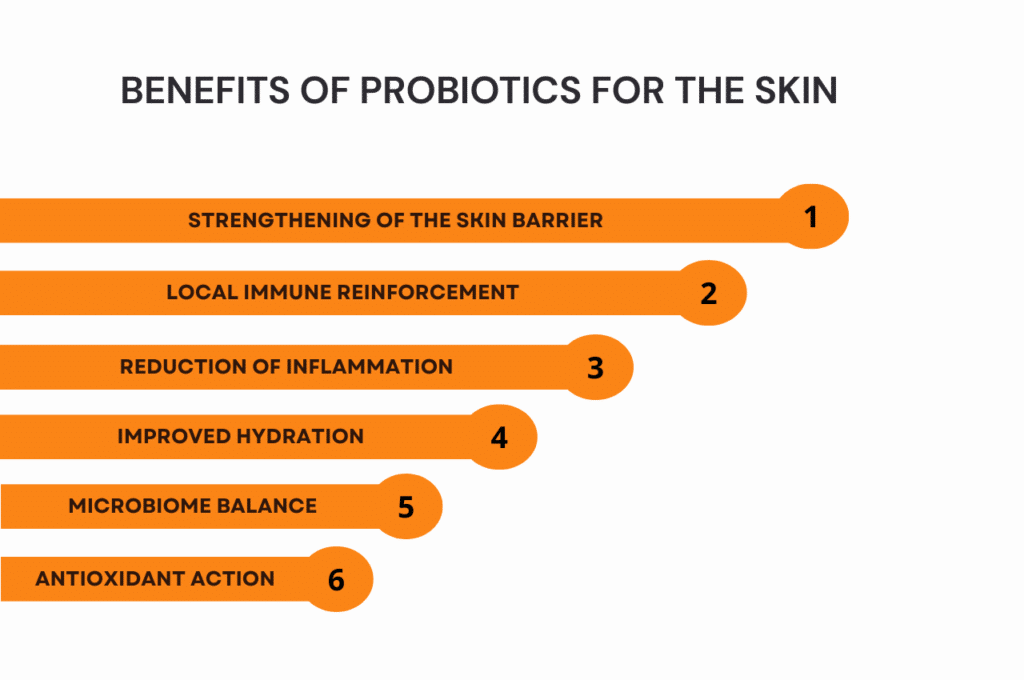
Probiotics act directly on the skin microbiome, promoting balance between beneficial bacteria and potentially pathogenic ones. They are highly valuable for soothing conditions such as eczema, irritated skin, dermatitis, or atopic skin. The effectiveness of these benefits of probiotics for skin largely depends on the ability of probiotics to remain active and viable in the final product. Therefore, strategies that ensure these factors are essential. Key benefits of probiotics for skin include:- Strengthening the skin barrier: Improve skin integrity by reinforcing its protective function against pollution, climate changes, and other external aggressors.
- Reducing inflammation: Help soothe irritated skin, diminishing redness and inflammatory outbreaks, particularly useful for sensitive, rosacea-prone, or acne-prone skin.
- Antioxidant action: Certain probiotics combat oxidative stress, minimising premature ageing and protecting the skin against free radicals.
- Improved hydration: Stimulate the production of ceramides and other essential lipids for water retention, enhancing smoothness and elasticity.
- Microbiome balance: Inhibit the growth of pathogenic microorganisms, helping to prevent infections and imbalances in skin flora.
- Local immune reinforcement: Stimulate the skins natural defences, improving its ability to recover from external aggressions.
Which Probiotics Are Best for Skin?
The probiotics most commonly used in cosmetics are specific strains selected for their capacity to improve skin health. Among the most studied are:- Lactobacillus: Known for reinforcing the skin barrier and balancing the microbiome.
- Bifidobacterium: Recognised for their soothing and protective properties against external agents.
- Streptococcus thermophilus: Associated with hydrating and skin-repairing effects.
The Problem with Probiotics in Cosmetics
Despite their strong potential, probiotics face a major limitation in cosmetic applications: their fragility. These microorganisms are extremely sensitive to factors such as temperature, humidity, UV radiation, or oxygen, making it difficult to include them in stable and effective formulations. During manufacturing, storage, or even after product application, many probiotics may lose viability, thereby reducing or eliminating their benefits of probiotics for skin. This highlights the importance of technologies capable of preserving microbial activity.System to Maintain Benefits of Probiotics for Skin
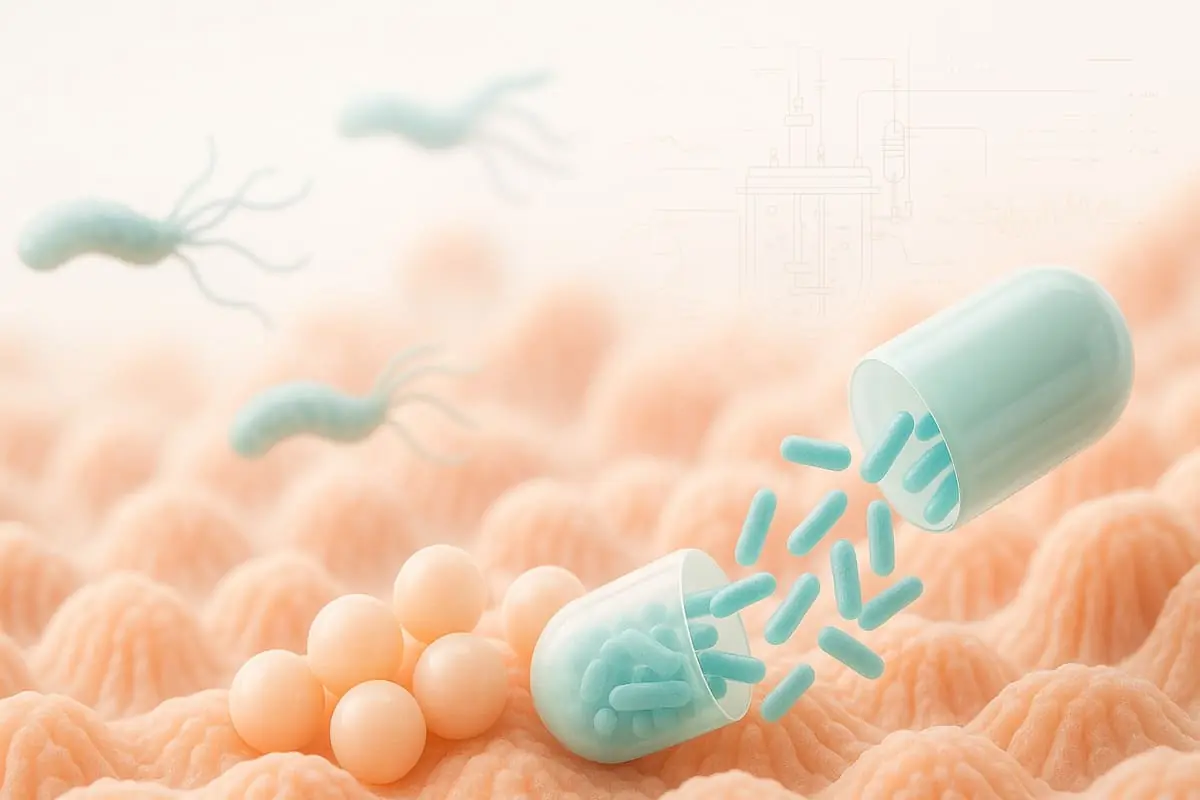
To address this challenge, a dual microencapsulation system has been developed to stabilise probiotic microorganisms and maintain their viability. This system:- Minimises premature release in the cosmetic matrix
- Enables controlled release of the microorganism at the moment of skin application through a second coating layer that melts at near-body temperatures
- Maximises probiotic viability at the time of application
Funded by the aid program for hiring young professionals specialized in internationalization