Low- and High-Moisture Extrusion Processes
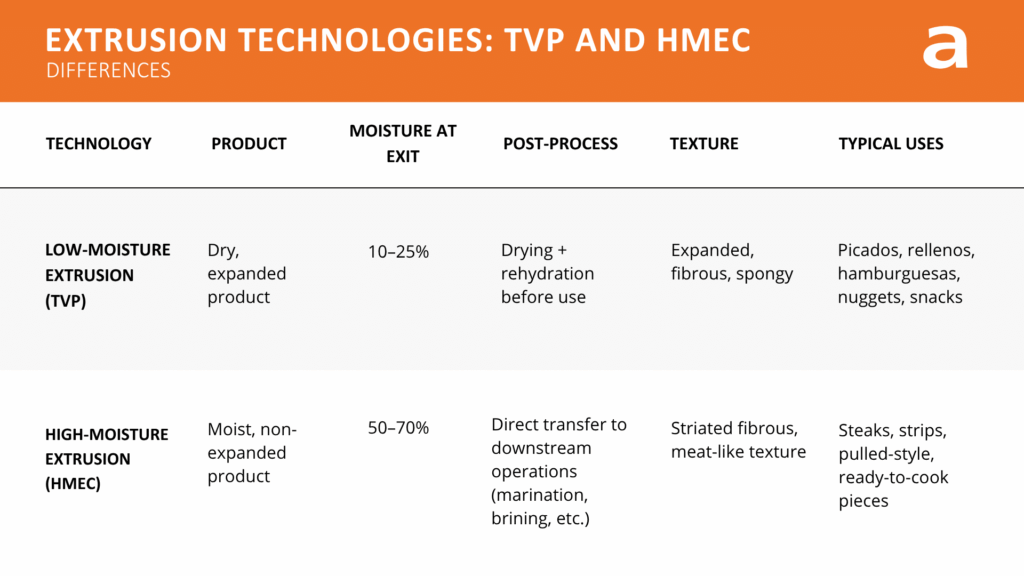
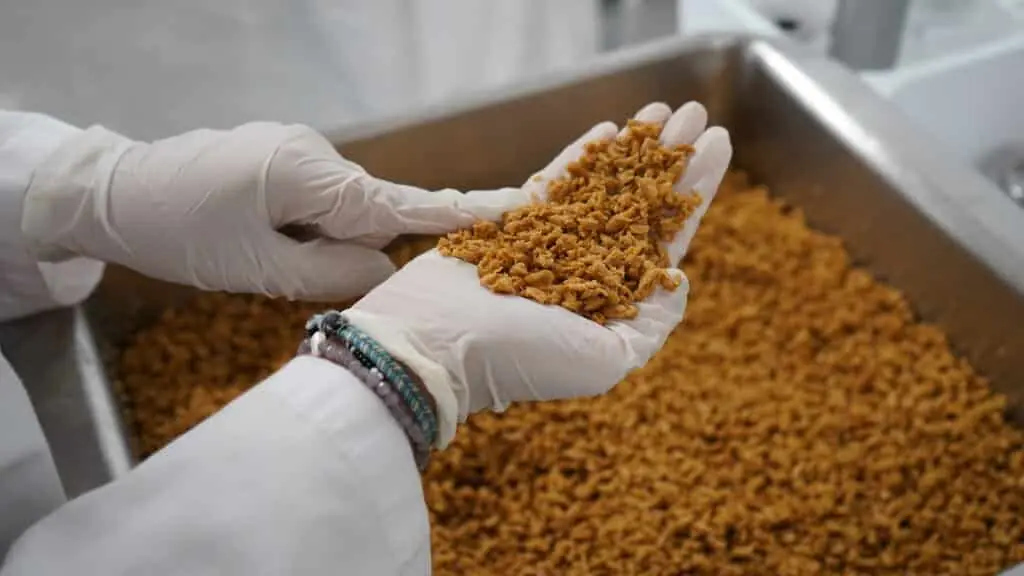
- Low-moisture extrusion (TVP / Textured Vegetable Protein). This process yields a dry, expanded, shelf-stable ingredient. It requires rehydration and offers high versatility as a meat substitute. Soy and pea are among the most widely used protein sources.
- High-moisture extrusion (HMEC / High Moisture Extrusion Cooking). This route produces a moist, non-expanded productready to cook and chill. It provides aligned, striated fibres ideal for steaks, strips, or pulled textures. Although adoption has lagged behind TVP, it is growing fast due to its superior sensory realism
Plant-Based Meat: TVP (Textured Vegetable Protein)
Advantages
- Availability & cost. TVP is easy to source in multiple formats (granules, strips, chunks).
- Flexible seasoning. It can be flavoured during rehydration or afterwards (marinades, sauces).
- Simple logistics. Ambient storage and transportno cold chain required.
Ingredients & Formulation
- Protein base. Pea or soy concentrates/isolates, wheat gluten, lentil, faba, sunflower; can be combined with microalgae, mycoprotein, or even insect proteins.
- Minor components. Starches, fibres, salt, colourants and flavourings to tune texture, stability, and sensory profile.
Final Product
- Less processed. Rehydrate to the desired juiciness, then build the organoleptic profile with flavours and seasonings. If needed, add stabilisers to support emulsions or texture during cooking; the product then goes directly to pan, griddle, or oven.
- More processed. For more elaborated references, the rehydrated mass is minced to homogenise and enriched with secondary ingredientsfats for lubrication, fibres for water retention, hydrocolloids for cohesion. Next, add binding/compaction agents to ensure hot integrity and form into the final formats (burgers, sausages, nuggets), ready for thermal processing and packaging.
Plant-Based Meat: High-Moisture Extrusion (HMEC)
Advantages
- Superior texture. Generates more meat-like fibres with pronounced striation.
- Cut versatility. Supports strips, steaks, pulled formats, and more.
- Fewer pre-steps. No drying or rehydration (product exits at ~5070% moisture).
- Direct industrial flow. Can proceed straight to downstream operations (marination, slicing, or immediate packaging).
Ingredients & Formulation
- Protein base (as with TVP). Soy, pea, or other plant proteins; can be blended with alternative sources to adjust functionality/nutrition.
- Minor components. Starches, fibres, salt, colourants and flavourings to refine bite, water-holding, and appearance.
Final Product
- Less processed. Avoid mincing/cutting to preserve fibrosity; marinades and browning work particularly well for steak-style references.
- More processed. Can be minced and transformed into restructured, ready-to-cook items while maintaining a fibrous structure (meatballs, burgers, etc.).
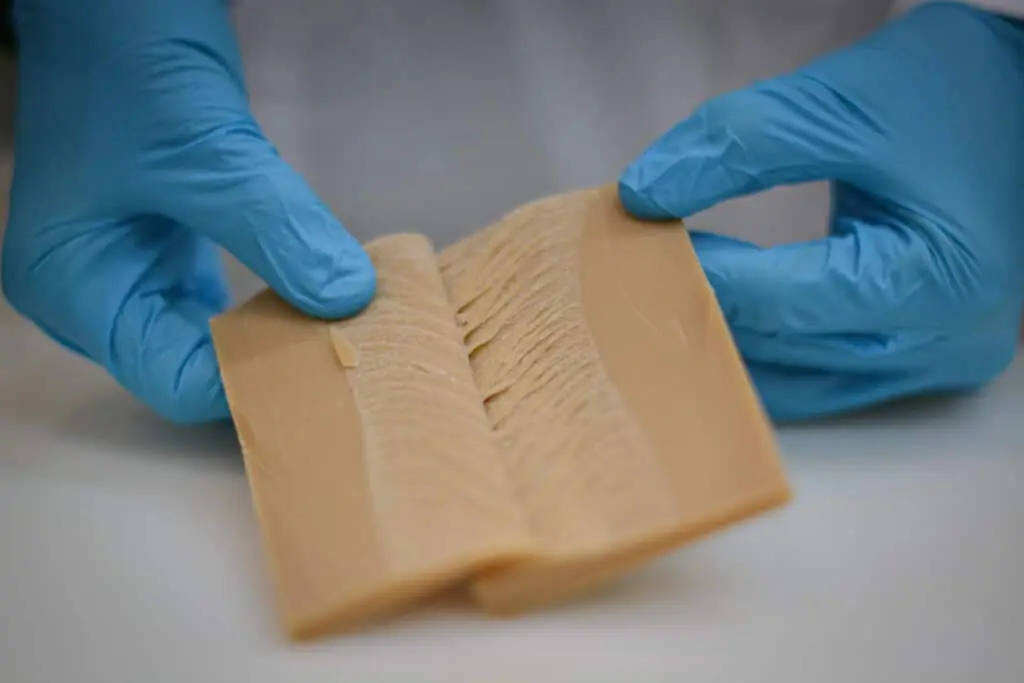
Creating Fish-Like Structures via Dry and Wet Extrusion: The SEAVEGEXT Project
Replicating fish-like striation, juiciness, and culinary performance in plant matrices remains a challenge. One barrier is the lack of clear guidance linking initial protein traits with process parameters and final properties. To address this, AINIA advanced three lines of work:- TVP and HMEC extrusion. Characterisation of novel protein sources and their behaviour, applying both low- and high-moisture extrusion to obtain new structures analogous to fish.
- Post-process tailoring. Study and application of downstream steps to refine and improve the extruded protein structures for sensorially suitable final products.
- Computational tools. Advanced process-modelling with computational technologies to optimise solutions by correlating raw-material characteristics, extrusion parameters, and final product properties.