Animal digestive health and animal nutrition are essential to ensure health and productivity in any production system, as they help prevent disease and improve product quality. For this reason, it is crucial to scientifically validate the effect of an ingredient on animals digestive system. Its not enough to include novel ingredients, it’s necessary to understand how they behave within the animals digestive tract and prove their real functionality.
How does the animals digestive system work?
Although the digestive process varies across species for example, between herbivores, carnivores, and omnivores, or between monogastric animals and ruminants it generally follows a common functional sequence: ingestion, mechanical and enzymatic digestion, fermentation, absorption, and elimination.
The duration depends on the type of feed and the digestive system of each species, and may range from a few hours to more than a day. The process is divided into several phases: oral, gastric (or pregastric in ruminants), intestinal, and colonic.
- It all begins in the mouth with feed intake. In ruminants, beyond the initial chewing, the process of rumination or regurgitation is essential, allowing the feed to be rechewed several times to facilitate its breakdown. During this phase, large amounts of saliva are produced, which are vital to maintain the proper pH in the rumen and supply bicarbonate.
- The feed then passes to the gastric compartment, which in ruminants is divided into four chambers: rumen, reticulum, omasum, and abomasum.
- From there, the feed (now called chyme) moves into the small intestine, where digestion is completed thanks to pancreatic and bile secretions, and the absorption of nutrients (amino acids, glucose, fatty acids, vitamins, minerals) takes place.
- Undigested and unabsorbed residues pass into the large intestine, where a second microbial fermentation occurs less intense than that of the rumen as well as water reabsorption. Finally, waste is eliminated through the rectum and anus as feces.
Evaluating ingredients through digestive process simulation
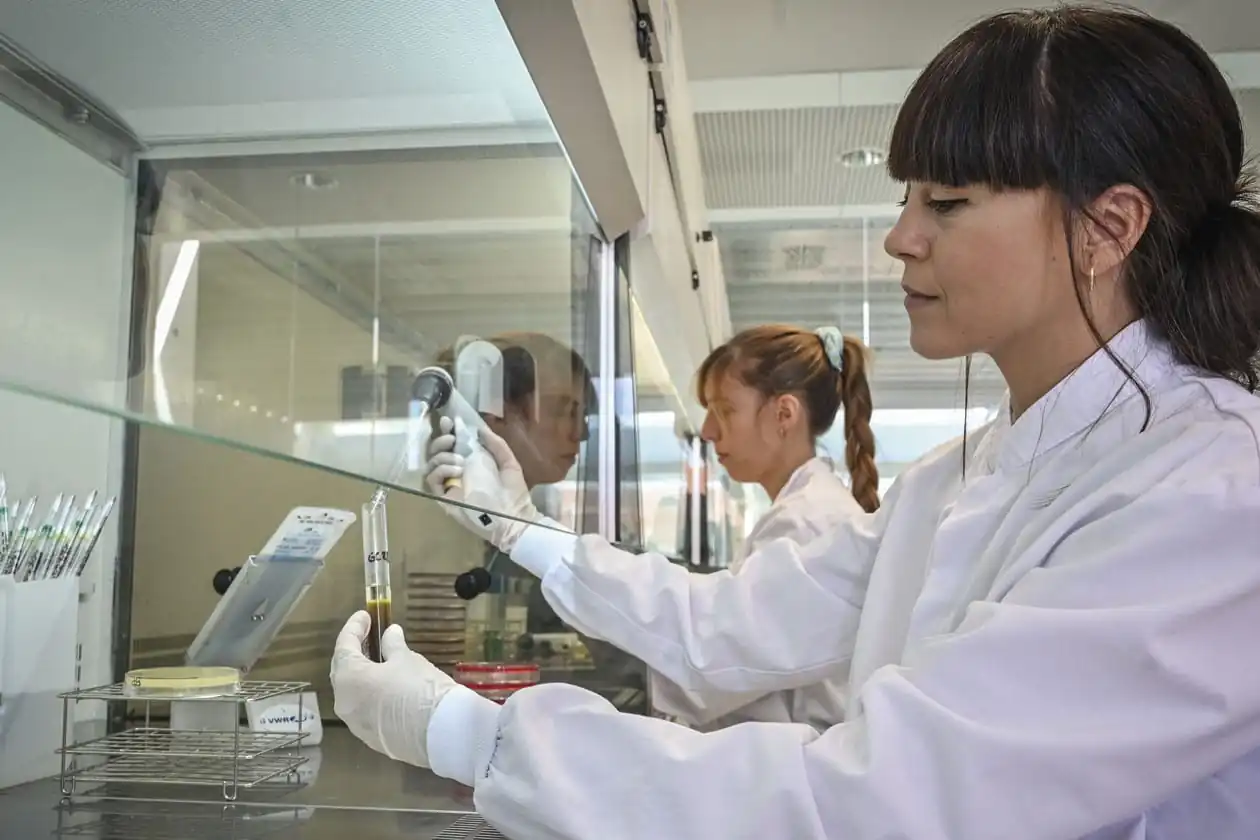
Thanks to in vitro simulation of the digestive process, it is possible to assess, in a controlled and reproducible manner, the bioaccessibility, bioavailability, and efficacy of an ingredient on animal digestive health.
Dynamic in vitro assays can replicate the physiological conditions of each phase of the digestive system: oral, gastric, intestinal, and colonic. Key parameters such as pH, transit time, concentration of digestive enzymes and bile salts are reproduced, and adapted to the digestive health of the target animal species.
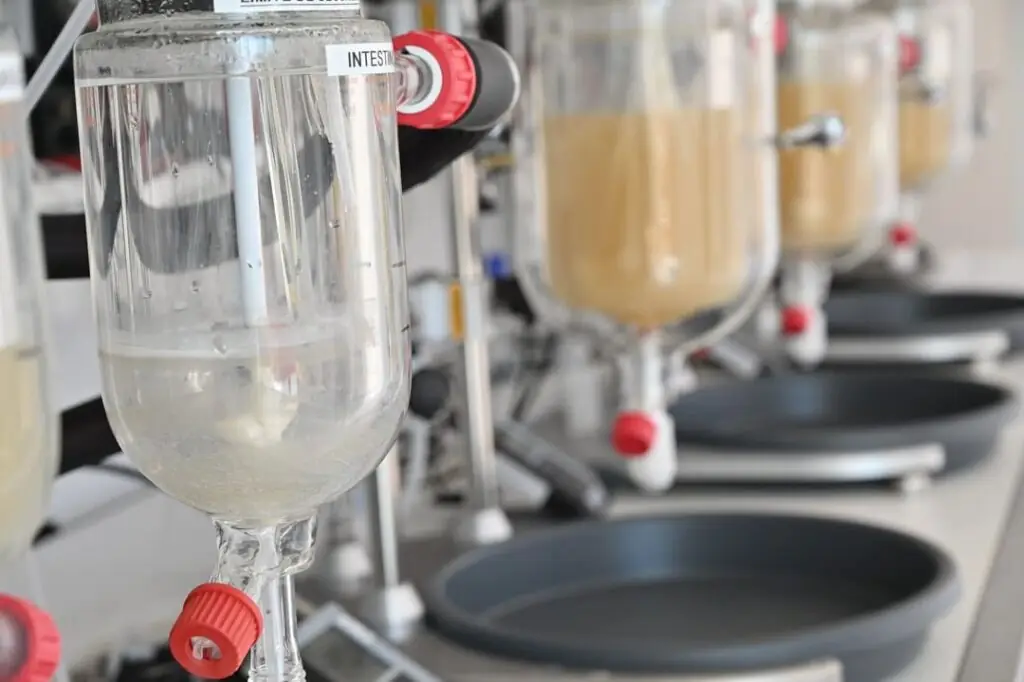
Advantages and practical applications of in vitro digestors for animals
The use of in vitro digestive models in animals offers multiple advantages in the context of animal nutrition.
- Firstly, they allow for a reduction in in vivo trials during early development stages, offering a more ethical, efficient, and cost-effective approach to validating functional ingredients.
- In addition, since these are controlled and reproducible systems, they facilitate the reuse of methodologies and experimental data in various evaluation settings.
- By optimizing resources, minimizing waste, and promoting the development of solutions that are more respectful of animal welfare and the environment, this approach fits within a more sustainable R&D strategy aligned with the 3Rs principles (Reduce, Reuse, Recycle).
Furthermore, these simulations are particularly useful for:
Animal digestive health: Evaluating interactions with the digestive tract:
-
Digestibility, bioaccessibility, and bioavailability
-
Monitoring release profiles
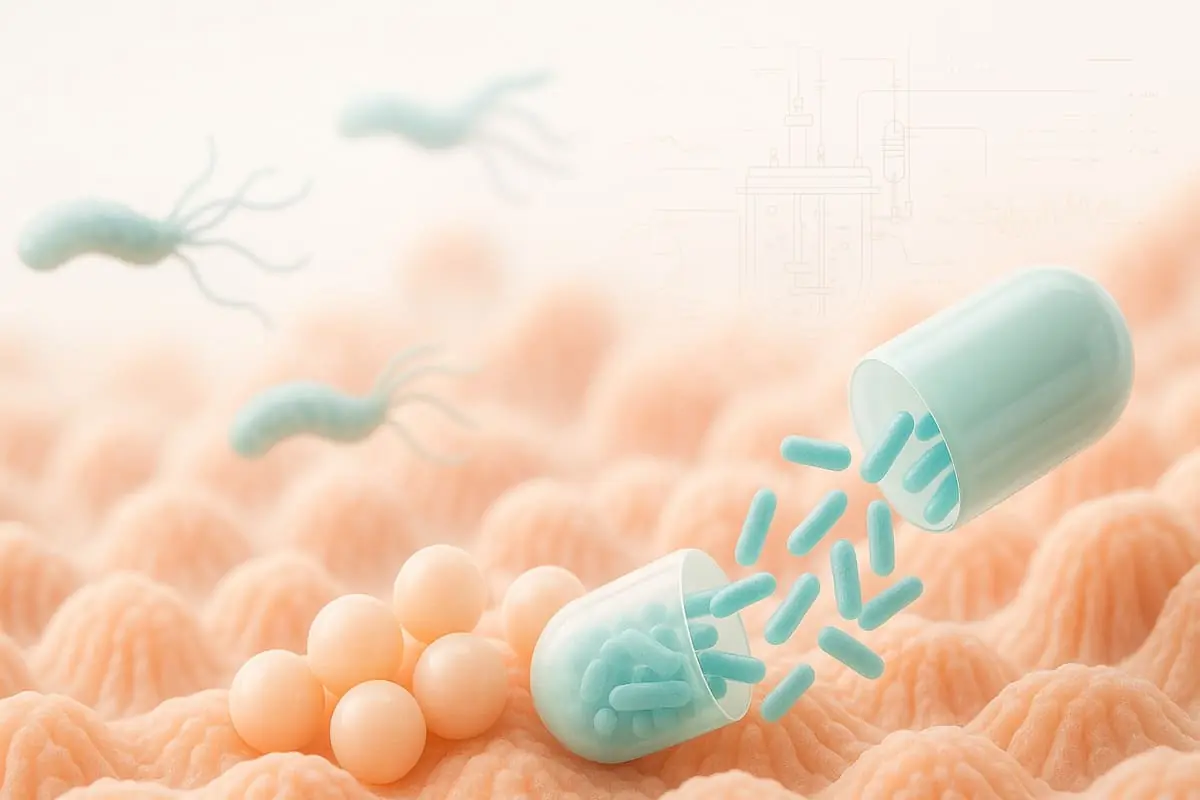
Observing interaction with the intestinal microbiota: probiotic and prebiotic effects
Thanks to in vitro digestive models in animals, we can:
-
Identify bioactive compounds
-
Study mechanisms of action
-
Improve the formulation of functional feed for pets or livestock
-
Validate the biological effects of digestive supplements or microbiome modulators
-
Identify new protein sources or alternative ingredients to improve digestive health
Funded by the aid program for hiring young professionals specialized in internationalization