What is the ionic gelation method?
The ionic gelation method is an encapsulation technique based on the formation of a gel-like matrix through the interaction between polyanionic polymers and multivalent cations. It is used to create a physical and functional barrier between a target compound, such as bioactive ingredients, enzymes, microorganisms or aromas, and the surrounding environment.- This encapsulation system relies on the ability of certain biopolymers, such as alginates, pectins, or carrageenans, to cross-link in the presence of cations like Ca²?, Zn²? or Ba²?, forming a three-dimensional structure with controlled mechanical and diffusion properties.
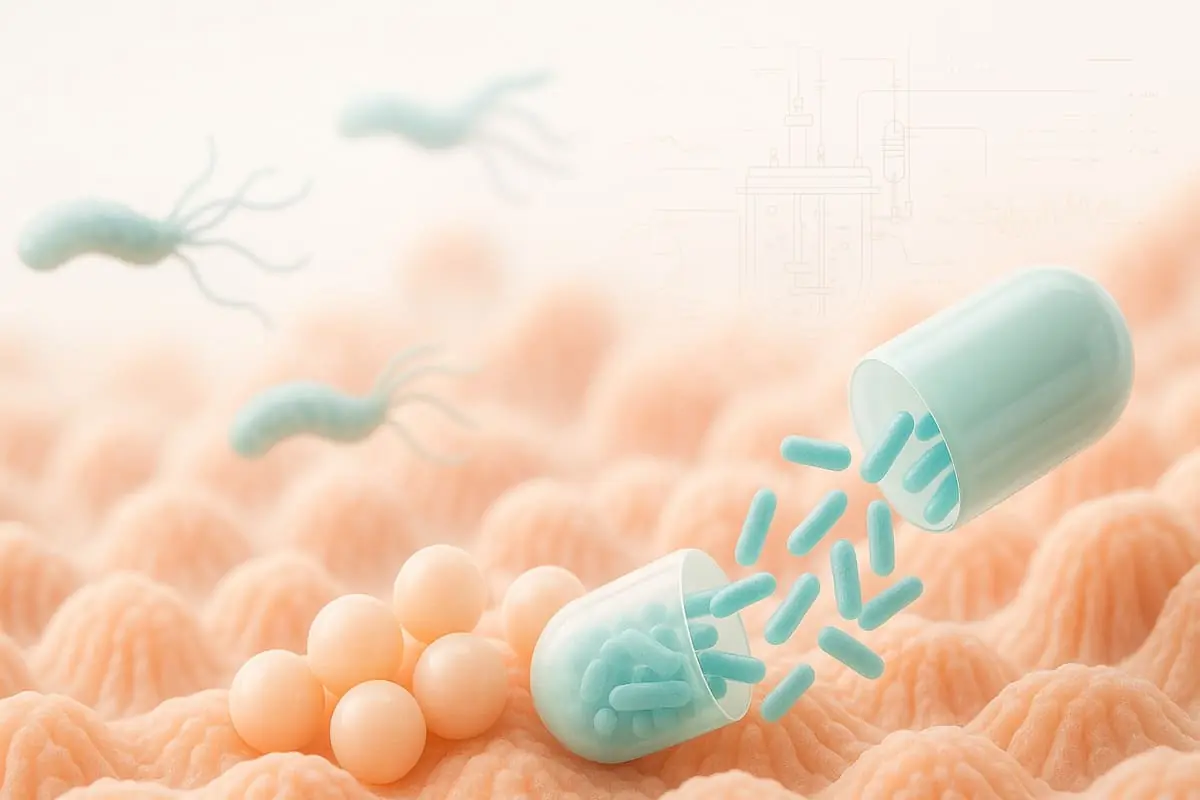
- The result is a gelled microcapsule or microsphere capable of improving the physicochemical stability of the encapsulated compound under adverse conditions (such as changes in pH, temperature, or oxidation). It also enables the modulation of active ingredient release based on environmental factors (e.g., gastrointestinal pH or the presence of enzymes), which is particularly valuable in food applications. In some cases, the bioavailability of the compound may also increase due to the protection and targeted release provided by the capsule.
Production of microencapsulated products
- Encapsulation under mild conditions: No heat or organic solvents required, making it ideal for thermo-sensitive or unstable compounds.
- High compatibility with natural biopolymers: Utilises food-grade materials such as alginates, pectins, or carrageenans.
- Improved physicochemical stability: Protects against oxidation, light, pH, humidity, or interaction with other ingredients.
- Controlled release capability: By adjusting the type of polymer, gelling agent or environmental conditions, the release rate and site can be fine-tuned.
- Potential enhancement of bioavailability: Protects compounds until their site of action, improving absorption.
- Flexibility in particle design and size: Suitable for various formats (microspheres, capsules, films) and scalable to industrial levels.
- Applicable across sectors: Functional food, nutraceuticals, cosmetics, and biotechnology.
Applications of the ionic gelation method in microencapsulation
The ionic gelation method is extensively used in the design of delivery and protection systems for active compounds, especially in industries where stability, functionality, and targeted release are critical factors.- Food industry: Encapsulation of probiotics, vitamins, antioxidants, enzymes, aromas, and bioactive compounds to improve stability during processing and controlled release in the gastrointestinal tract.
- Nutraceuticals and supplementation: Development of formulations with sustained or targeted release, improved bioavailability of lipophilic or poorly absorbed compounds.
- Cosmetics industry: Incorporation of active ingredients such as essential oils, natural extracts or moisturising agents into encapsulated systems that protect against oxidation and enable gradual skin release.
- Agriculture and biotechnology: Controlled delivery of beneficial microorganisms, nutrients or biostimulants in sustainable agricultural formulations.
Funded by the aid program for hiring young professionals specialized in internationalization