AINIA / Laboratories / Packaging materials / Migration (global and specific)
- Packaging materials
Migration
Assessment of migration in food contact materials
Evaluates the risks of migration of chemical components from packaging into food. Verifies regulatory compliance and declarations of compliance.
Manufacturers, processors, and importers of food contact products must guarantee their safety for consumers, ensuring that there is no migration from the packaging into the food.
Food contact materials must comply with strict regulations depending on the type of material and the market where they will be commercialised.
In terms of food safety, it is necessary to verify that food contact materials comply with general legislative requirements (Framework Regulation (EU) No 1935/2004) as well as the corresponding specific measures (e.g. Regulation (EU) No 10/2011 for plastic materials, RD 891/2006 for ceramics, RD 847/2011 for polymeric materials, etc.).
At AINIA, we add value
-
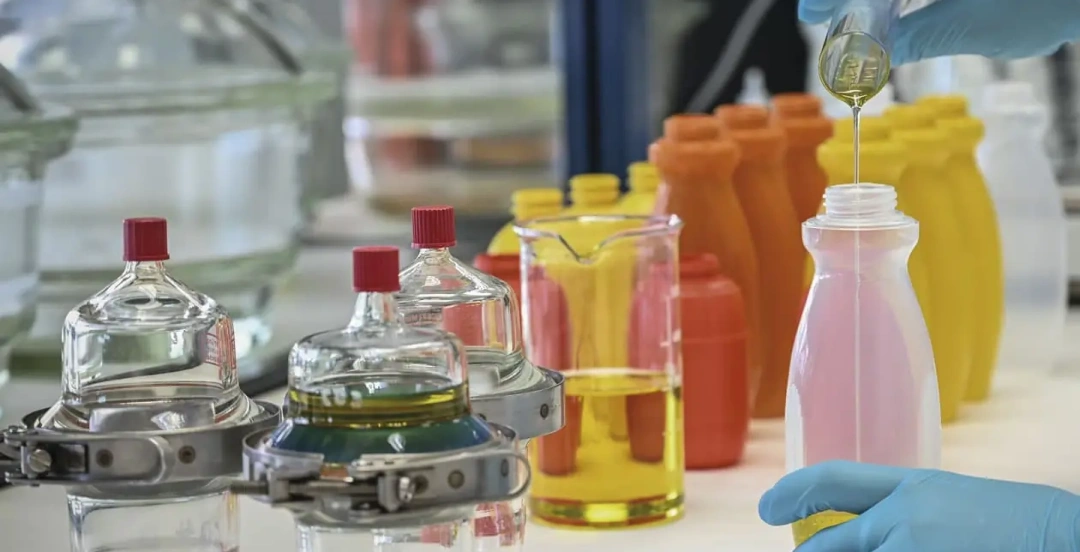
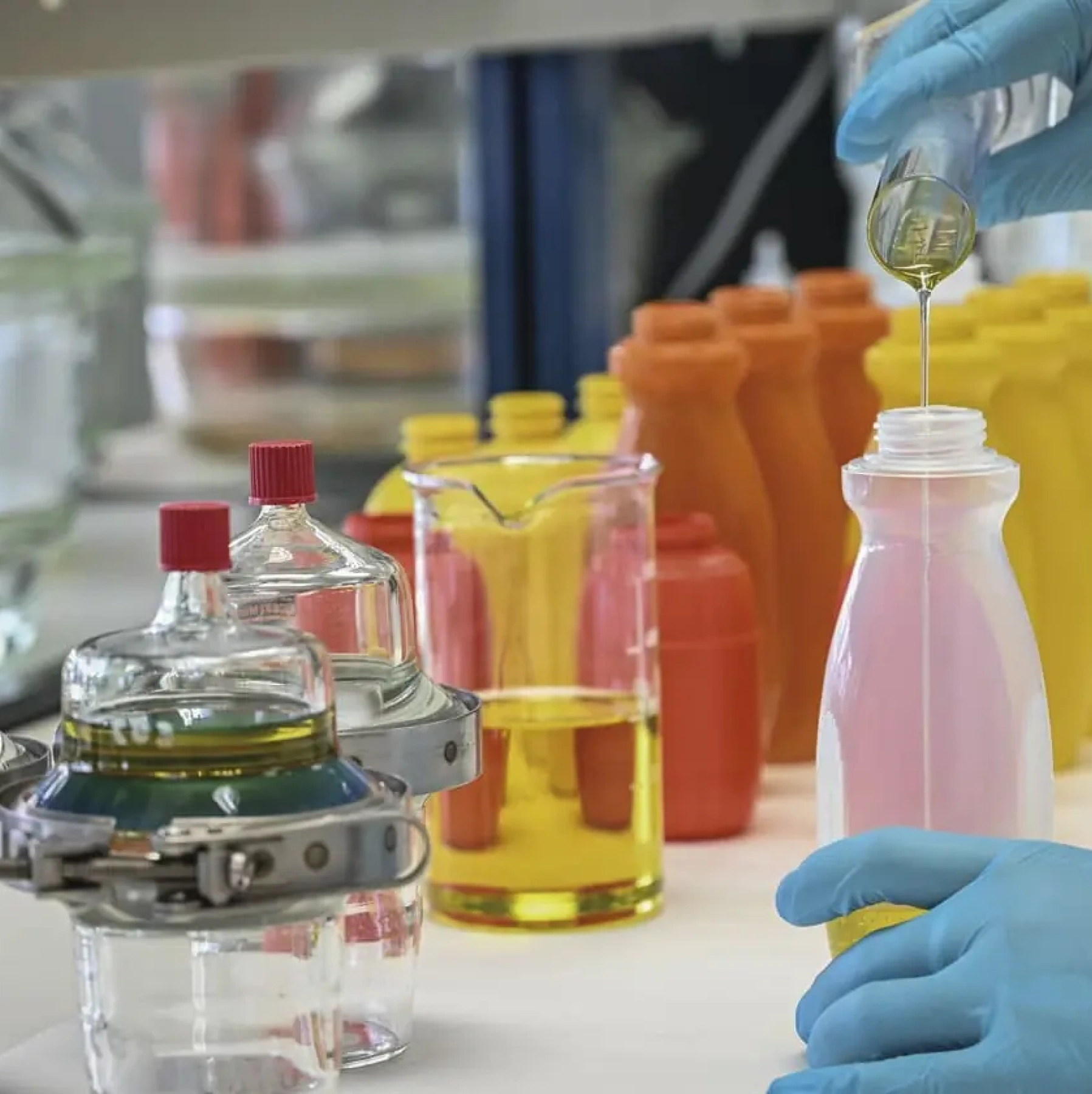
Global migration of plastic materials in simulants
- Aqueous (A, B, C, D1)
- Fatty (D2)
- Fat substitutes (isooctane and 95% ethanol)
- Poly(2,6-diphenyl-p-phenylene oxide) (E)
-
Global migration of polymeric materials in simulants
- Aqueous (A, B, C, D1)
- Fat substitutes (isooctane and 95% ethanol)
- Poly(2,6-diphenyl-p-phenylene oxide) (E)
-
Specific migration of:
- Primary aromatic amines (Annex II of Reg. 10/2011: REACH and others)
- Elements (Annex II of Reg. 10/2011: Ba, Co, Cu, Fe, Li, Mn, Zn, Al, Ni, Sb, As, Cd, Cr, Pb, Hg, La, Eu, Gd, Tb)
- Formaldehyde
- Mono- and diethylene glycol, terephthalic and isophthalic acid, acetaldehyde
- Bisphenol A (BPA), Bisphenol F (BPF), BAGDES, BFGDES, and ეპoxy derivatives
- 1-hexene, 1-octene, etc.
- Fast response times, with turnaround adapted to our clients’ needs
- Advice on optimising control plans and interpreting final results
Check accreditation at: ENAC accreditations – AINIA laboratories

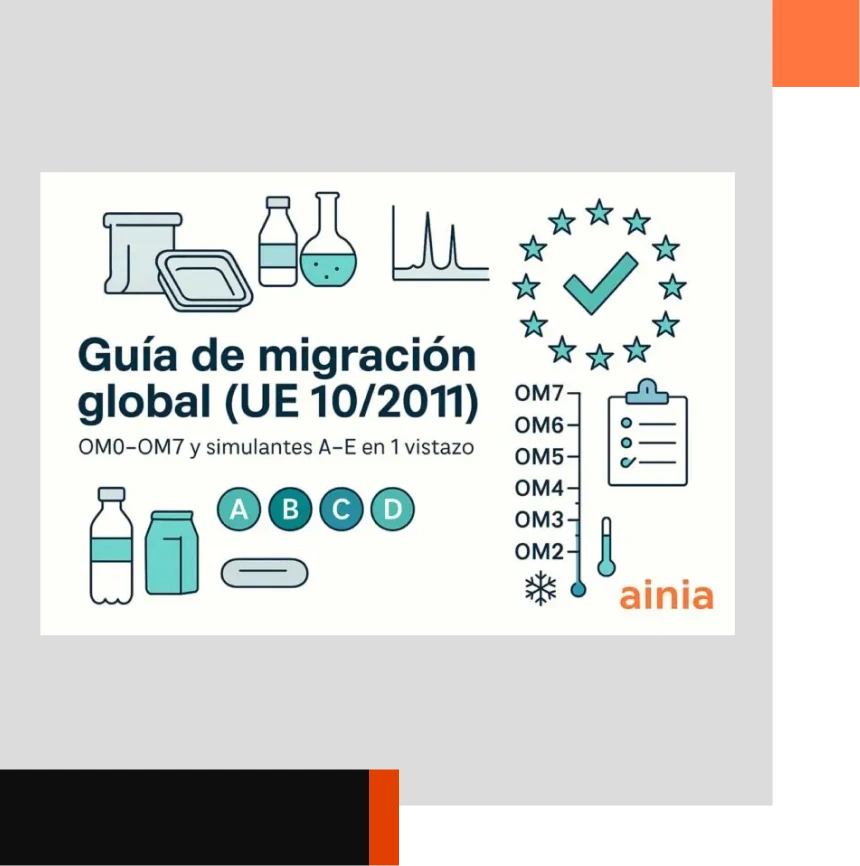
Global migration guide
OM0–OM7 conditions and simulants A–E
Visual guide to select

Migration
-
Identification of the applicable regulations according to the product and intended use
-
Advice on the selection of tests to be carried out according to the characteristics of the packaging materials to be used and the nature of the foods they will come into contact with (selection of simulants, standardised testing conditions, format, etc.)
- Carrying out analyses using the most appropriate techniques, combining high reliability criteria with costs and turnaround times adapted to our clients’ needs
- Issuing results through secure and accessible platforms based on modern information and communication technologies
- Advice for correct interpretation of the results obtained
Would you like to know more?
Leave us your details and we will contact you to answer your questions or continue the conversation.