Not a partner company yet? Sign up here
AINIA / Ingredients and Food / Obtaining protein ingredients from plant matrices
Extraction of oils and fats using supercritical CO₂ to reduce lipid content in food products


We can reduce the lipid content in food products (especially matrices rich in plant proteins), enabling the simultaneous production of low-fat food products — even with fat contents below 1% — together with high-quality natural oils and fats free from solvent residues and suitable for a wide range of applications (food, cosmetics, pharmaceuticals, etc.).


Tailored solutions are offered depending on the company’s starting point and target objectives, and may include some or all of the following stages:
Experimental exploration to obtain real data supporting or rejecting the suitability hypothesis of the technology for the proposed objective.
Selection and adjustment of conditions for industrial-scale estimation. Experimental study to define the main variables involved in relation to raw materials, process conditions, etc., including tests at different scales to evaluate scale-up possibilities within pilot capabilities. Processing cost estimation.
First industrial trial. Experimental study with tests aimed at validating, at industrial scale, the direct application of conditions established at pilot scale and adjusting the main variables impacting process economics. Identification of processing costs for different batch sizes under the agreed quality specifications.
Successive application of a defined production process in terms of process variables and associated economic conditions for the agreed batch size.
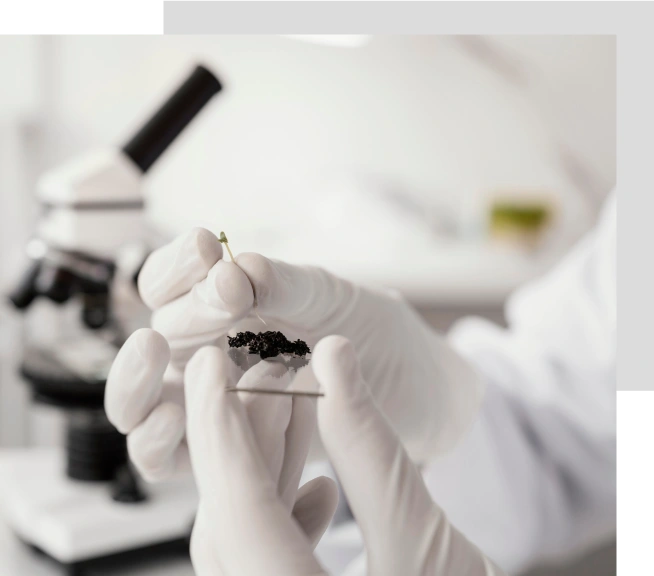
Our extensive expertise in cell culture and regenerative medicine and tissue engineering techniques… Cultivated meat is produced using the same cell types as conventional meat, arranged in the same or a similar structure to animal tissues, thereby replicating the sensory and nutritional profiles of conventional meat.
Leave us your details and we will contact you to answer your questions or continue the conversation.